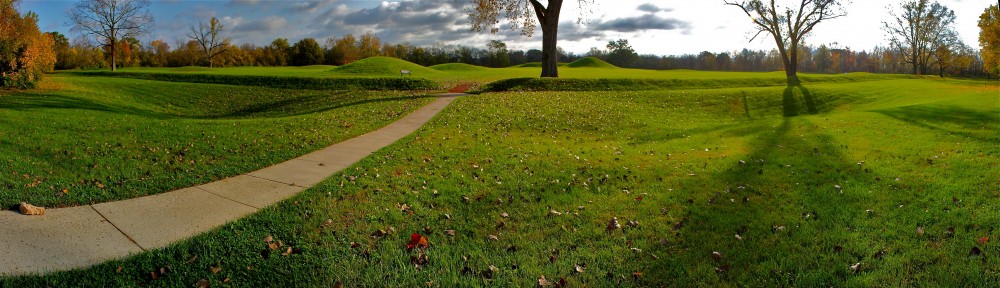
Achieving a Safe Spot
Once you have found a location that suits you, the next step is to make it a reality. Sometimes a tiny amount of effort is all that is required to give you the momentum you need. For example, I was once on a TV game show. The difference between having that experience, or not, was writing my name and address on the back of an envelope and posting it. When the application form arrived, I felt compelled to complete it. When they gave me an interview, I felt compelled to attend. The hardest part was sending the original envelope.
For you the step that gives you momentum might be to phone a realtor and ask if there are any suitable properties for you to look at. Or perhaps filling your car with fuel and driving there, and staying the night. Once you have had a look around, and have chatted to some locals, you could be on your way.
Thankfully the Internet makes looking for real estate (and other things) easy. Take time to search for all the possibilities for your safe spots(s). Look at bare land, land with old buildings, land you can build on. Look for rental accommodation, shared accommodation, motels, caravan parks and so on. Search for “intentional communities”. There are many such places (often known as communes) which are not specifically for SHTF, but are sympathetic towards it.
Look for signs of the type of people that live in your safe area – for example organic farming indicates a more self-sufficient community. Look for employment – perhaps a job comes with accommodation. Perhaps WWOOFing suits? Doing some WWOOFing (working on organic farms) now could provide you with valuable contacts and knowledge.
Mapping Your Options
Google Maps is great for this. Follow the instructions here to build your own customized map, where you can highlight locations and draw routes:
Food and Water
Drinking water should always be your number one priority, because the lack of it will kill you.
James Wesley Rawles suggests printing out instructions for the use of hypochlorite tablets, and filling ziplock bags with six ounces of the tablets each. You will then be able to quickly dispense them to anyone you come across, and know that your foresight could save lives.
There are a couple of aspects to survival nutrition which tend to be neglected. Meat from the likes of wild rabbits is very lean, and to avoid digestive problems you need to compliment it with fibrous foods, like wheat or corn, or fresh fruit and vegetables. Freshly grown sprouts will do the trick. The other aspect to be aware of is fats and oils. In the west we tend to avoid these as much as possible if we are watching our weight, but your body requires them to some degree. Bulk survival foods tend to be light on fats, so make sure you have some stored away. Keep plenty of olive oil on hand, make sure you rotate it, and keep an eye on expiry dates. Freezing it is an option, but only in plastic bottles. Other possibilities include canned butter or lard – something to spread on your homemade bread. Also consider mayonnaise, peanut butter or even Spam (which is 27% fat). Aside from stored items, you could also plan on growing peanuts, olives or sunflowers – or raise your own cows/sheep/pigs.
MREs
Meals, Ready to Eat are designed for the armed forces, for men who need to be highly mobile and have high calorific needs. MREs are expensive. The only place for them is in your go bag.
Triple Redundancy
Plans can fall apart or outright fail. This is especially the case where the SHTF scenario might not be the one you most envisage, and could even be something you had never considered.
We are not use to having Plan Bs and Plan Cs in our day-to-day lives. Mostly because we can get by without having other options pre-planned. Partly because it hasn’t crossed our minds. Hands up who has a second job/career already planned in case you lose your current job? Even nuclear power plants are guilty of not being prepared for the worst. Most nuclear power plants only have a single backup plan to save them from a meltdown – if the external power supply is cut, they turn on diesel generators. They do not have a reliable Plan C for if the generators fail. That was the problem in Japan in 2011.
However, when it comes to the lives of you and your family, I suggest that you have some spare plans, just in case. If you agree with me that escaping the city when the SHTF is the best option, what will you do if escape isn’t possible? Say your car fails to start due to an EMP attack. Or you break your leg during an earthquake? The next best plan is to stay at home (an environment where you have a lot of inside knowledge), BUT to also have prepared for this eventuality. Even if you have a big stash of supplies at your safe spot, keep a good level at home as well.
For Plan C you need to be more creative. Near your home, on route to your safe spot, and near your safe spot, you need alternative survival venues for when your home and safe spot are unavailable to you (say they burned to the ground during a meteor strike…). Here are some ideas to get you thinking:
- Friends/relatives
- Abandoned buildings
- Buildings that will be abandoned when the SHTF, like a sporting pavilion
- Commercial properties with basements
- Commercial properties with supplies, like food distributors
- For those in Europe… a castle!
Obviously you will not have a stash of supplies at such locations, so make sure your B.O.B is fully equipped
Emergency Training
Survivalism is a counter-cultural hobby for many, and there’s nothing wrong with that. But that doesn’t mean you have to ignore orthodox channels of training. Aside from reading books and joining online forums, there are places where you can learn firsthand, from experts, such as:
- Red Cross – learn First Aid
- Army Reserve
- FEMA / Civil Defence courses
- Volunteer Fire Brigade
In his book Emergency, Neil Strauss joins a variety of organizations where he learns how to act in an emergency situation. While this is good preparation for solo surviving, where the confidence that you have the appropriate skills is a powerful asset – he is now also more able to help others, and he gets to hear about an emergency prior to the general public.
Know Your Safe Spot Neighbours
At home, and at your safe spot, the more people who know (and like you), the better. If you are knocking on someone’s door, wanting help during an emergency, how will you be received as a stranger, compared to if you are an acquaintance? Keep in mind that this swings both ways, and you might have neighbours seeking help from you. If being friendly suits you, make an effort to get to know your neighbours, but be very careful to not let on that you have nine rifles, a thousand rounds of ammo and five year’s supply of food and water. Soon the whole local district could know.
Consider keeping a database of people in your neighbourhood. I don’t mean soap opera details, but anything that might be meaningful in a survival scenario. Where do the local doctors live? Who has the same model vehicle as yours (spare parts)? Or, who is old and frail and might be needing your help?
At your safe spot, make a map of the surrounding properties, and get a feel of where the boundaries lie, and who owns what. List their phone numbers – perhaps before fleeing a bush fire you can ask your neighbour how things are looking on their property…
Electric and Electronic Items
If the power grid is down, possibly down forever, then you’ll need electricity for your devices. At your survival spot a generator is a must, and the native output of a generator is DC. Using an inverter is relatively inefficient, so to conserve future energy buy electrical products that can run on DC power wherever possible.
For batteries, products that take the standard sizes are a significantly better choice than ones that take obscure battery sizes. Even though they might expire before you get to use them, buying hundreds of batteries today could be a smart investment. Batteries sold at your local 7/11 are 2x, 4x or even 10x more expensive than bulk purchases. A Google search for “buy bulk batteries” will find stores that sell them from about 50c each. eBay is another good place to try. If you are wanting to buy hundreds of batteries, batteryjunction.com has AA Duracell Coppertops for 42c each. Even if you only use a fraction of those purchased, you will have saved money compared with buying them from a convenience store at the last minute. And when the SHTF, they will likely be one of the new currencies.
Mechanical Items and Tools
It doesn’t really matter what they are used for, if you have the opportunity, accumulate them. Anything a builder or mechanic or farmer would use, is going to be valuable post-SHTF. Buy anything in this category that you feel you will need personally, and if you come across anything else (yard sales, friends throwing old equipment away), grab it.
Unusual or Unexpectedly Useful Items
Here’s an assortment of items that are not that obvious, and don’t typically turn up on other lists you may come across:
Wet wipes / wet ones / moist towelettes… a very convenient way of cleaning something if there is no water around. Indispensable if you have a baby to care for.
Toiletries and feminine hygiene. Post-SHTF could be a very grubby environment, and in modern society that repulses many of us. These could become luxury items, and help members of your party stay sane.
Engine Oil. Everyone will have canisters of gasoline, but engines need oil as well.
Lime – for makeshift toilets. Buy large bags of it.
Down Jackets, woollen hats, thermal socks, thermal underwear – in case SHTF means the next mini-Ice Age begins.
Parachute Cord and Duct Tape are extremely versatile. As one example, imagine how much easier building a bivouac would be with these two items and a good knife.
Spices – compact, cheap, and can make those survival rations taste a lot nicer.
Candle wax and wicking – for when all the batteries have run out.
Dental instruments and supplies (try eBay). Post SHTF, people will still need dentists. If you happen to locate a dentist, he or she might not have any equipment, especially if they have fled the city. Alternatively, armed with the famous Where There Is No Dentist book, the instruments can be used by DIY dentists.
Hiding Out
Here’s a description of my ideal and specific safe spot.
- Fifteen minutes drive from a small town, an hour’s drive from a large town
- Uphill, and preferably near the top of a hill. But not so that your property forms part of the skyline…
- At the end of the road. Be able to see (with a telescope or binoculars, and from a lookout, not a house window) all the premises that are along your road. Any unwelcome visitors will probably systematically visit your neighbours, and you’ll be last. If you are serious about security, you will see strangers before they see you
- A bridge that can be destroyed, or a narrow pass than can be caved in. As long as you know of an alternate route, taking out the main route could be a sufficient hindrance to have visitors turned around and look for somewhere more accessible to raid. Or even just fell a tree – most visiting vehicles will not attempt to clear the road unless they are certain of something worthwhile ahead
- Land (and climate) suitable for growing crops and raising livestock
- Dams, springs, rivers or streams for water. Make sure a once-in-a-hundred-years flood will not affect you
- Two residences, neither visible from the road
- The residence closest to the road is the decoy. You will leave it looking like the owners fled a long time ago. That means leaving many things that are too bulky to transport – even if you’d rather be using them in your main house. Let food rot in the refrigerator. Leave the lawnmower in the garage, and so on
- Your second residence should be as far away from the first as possible, with no obvious means of access. Any existing paths should be disguised or repurposed – perhaps turn a driveway into an (untended) veggie patch.
Hiding Things
Repurpose a bulky object by ripping out the insides to create storage space. Possibilities include tube TVs, computers (if they are worthless post-SHTF), old mattresses (stored vertically in case someone wants a quick nap), or fridges and freezers as long as they are outside and surrounded by overgrown grass. You can use filing cabinets or cardboard boxes as long as you label them so they appear to contain boring useless things like magazines or tax records, and make sure that the first boxes they open actually contain those things.
If you don’t have these sorts of old items, get them for free via Freecycle.
Another idea is to bury you items underneath anything you have a pile of, be it firewood, sand, gravel, bricks or hay. Many of your valuable goods can be buried in the ground.
The trick is to bury them beneath something that can disguise that “this dirt was recently dug” look. Park a wrecked trailer over your stash, or perhaps a compost bin or a chicken coop.
Also, I mentioned above that you should be able to see your neighbours, but at the same time you do not want your house to be visible. The easiest way to achieve this is via a natural screen. A row of fast growing trees could do the trick, but you need to make sure that the spacing looks natural – try having them more than one row deep.
Sandbags and Gravel
Another great tip from James Wesley Rawles. Ever wondered where all the sandbags come from during a flood emergency? The authorities have them stockpiled, tens of thousands of them, because they are such a useful asset. You can fill them with just about anything, and they are of a size that most able-bodied adults can handle. They stack easily. And they are dirt cheap – when buying in bulk you can get several for a dollar. Fill them with gravel and they will stop bullets. Don’t have any gravel? Get a truckload delivered to your safe spot today – if your place ever gets muddy, gravel can help you out with that as well. That pile of gravel could also make a nice place to store something that intruders will never find.
Get Your Health Sorted
If you have been putting off any elective surgery, it would be a good idea to use SHTF as your excuse to get it done. Laser surgery on your eyes should be considered if you have poor eyesight. Alternatively, buy a dozen of the cheapest spectacles you can find for your prescription, and store them at home, in your car, and at your survival spot.
SHTF can also be used as an excuse to become fit and healthy. The first few days of a catastrophe could require you to perform physical tasks you are not accustomed to, so being prepared could make all the difference.
If you are reliant on medication due to poor diet or being overweight (particularly type 2 diabetes), now is the time to work on improving your health. Your medical supplies might not be available in the future.
If at all possible, stockpile your medications. Your doctor might be able to help you, either if you just tell them the truth, or if you say you are travelling to Africa for six months. In some online forums it has been suggested that antibiotics can be purchased from vets, but make sure you have researched this thoroughly (for the specific thing you are stockpiling) before trusting such advice…
Communications
Most people will struggle to just achieve their safe spot and a stockpile of supplies. While I have day-dreamt about setting up a SHTF shortwave / ham radio broadcast, I accept that I don’t have the time to learn and setup a suitable system. Hopefully there will be post-SHTF broadcasters for us to tune in to, and therefore make sure you have a good radio and means of local two-way communication.
Freeplay make good quality survival radios, solar or hand-cranked (mine has both), that receive all the bands including shortwave. Be wary of the cheapest options, the quality can be so low that they are unusable. I’ve had hand-cranks that have snapped upon first use, and solar radios that fail to charge. So at the very least, get them out of the box and use them, so that you can trust they will work later. All-in-one gadgets that include sirens and torches are appealing, but you are better off buying individual quality gadgets, even if that means they take up more space.
Walkie-talkies can be found reasonably cheap, and they are fun to test. Make sure you have a set or three. I guarantee you will use them if/when cell phones cease to function. If you are concerned that you might be overheard, buy a pair of military surplus field telephones for your survival retreat. And learn how to use them. Another solution is owning a marine band radio – not many people will be monitoring those bands miles inland.
Consider a multi-band police scanner:
- Be the first to hear about a local catastrophe
- Stay informed about crimes during an emergency
- Keep safe from the police if you decide you need to loot… or any other survival activity that a by-the-rules police officer might disapprove of. The last place you want to be is behind bars as that tsunami approaches
EMP Attack
An electromagnetic pulse basically fries electronics. Nuclear bombs are also EMPs, and terrorists could set-off a purpose-built EMP device – if you live near government facilities, or say Wall Street, or a Google data centre, be mindful of this possibility.
The following is from a 2004 report to US Congress titled Report of the Commission to Assess the Threat to the United States from Electromagnetic Pulse (EMP) Attack
Several potential adversaries have or can acquire the capability to attack the United States with a high-altitude nuclear weapon-generated electromagnetic pulse (EMP). A determined adversary can achieve an EMP attack capability without having a high level of sophistication.
EMP is one of a small number of threats that can hold our society at risk of catastrophic consequences. EMP will cover the wide geographic region within line of sight to the nuclear weapon. It has the capability to produce significant damage to critical infrastructures and thus to the very fabric of US society, as well as to the ability of the United States and Western nations to project influence and military power. www.empcommission.org/docs/empc_exec_rpt.pdf
A best-selling novel on this scenario from 2009 is One Second Later, read the plot summary here: http://en.wikipedia.org/wiki/One_Second_After (it also has a forward by 2012 presidential candidate Newt Gingrich)
Antique tube radios, for example the Zenith H-500 shortwave radio, are safe from EMPs.
Modern cars have electronic parts that will be fried by an EMP. So, in this regard, the older your vehicle is (as long as it is dependable), the better. In the USA, cars and trucks have had electronic ignitions since the mid to late 70s. If that’s the only electronic part in your vehicle, keeping a spare in a Faraday Cage enables you to quickly get your vehicle functioning.
Given that a pre-1975 car should be quite cheap (if you can find a reliable car that old…), perhaps have one at home as well as your every-day modern car. And if you can afford it, have one at your safe spot as well. If they are the same make/model, you can use one for spare parts.
Speaking of vehicles at your safe spot, strongly consider purchasing an old diesel tractor. I guarantee you will find uses for it, SHTF or not.
Faraday Cage
This is a box or room that provides magnetic shielding. In the crudest sense, it is a metal box with a non-metal lining. It’s a good place to store spare electronic items, such as car components, screen device (like an iPod touch or iPad), cell phone, radio or camera.
I have not built one myself (yet) and I have searched in vain for a cheap retail product. Your only options are to build one yourself or buy an expensive industrial one. Homemade cages can be tested by seeing if a wireless device gets reception inside.
Instructions on how to build a proper Faraday cage yourself are here: http://www.jeddaniels.com/2007/faraday-cage-part-1/
http://www.faradaycage.org/
The main difference in quality between those above and those below is having it grounded.
Making an el-cheapo version yourself:
http://suburbansurvivalblog.com/budget-faraday-cage-for-small-electronics
This company will build one for you:
http://www.herzan.com/products/electromagnetic-interference-isolation/faraday-cages.html
Staying at Home (instead of having a safe spot)
James Wesley Rawles makes an important point in How To Survive The End Of The World As We Know It – your homes are not very secure. Modern homes typically have:
- Large glass windows without bars or shutters
- Easy access for vehicles
- Parent’s rooms sometimes not alongside children’s rooms
- Windows next to, or in, exterior doors
- Sliding glass doors
Our homes are so easy to break in to, that many of us rely on electronic products to secure our homes. After the SHTF they might not work, and the police & security services we depend on might not be available.
Post-SHTF Trading and Bartering
Most people will be focusing on the primary objectives of food, water, safety and general survival. But when everything has settled down, the post-SHTF environment might be one without a cash currency. Suddenly, de facto currencies will emerge, and lots of useful items will be pivotal when people trade. Having skills and knowledge in these areas could give you great advantages for on-going survival.
First up, anything that will be valuable after a disaster, but is cheap now, could be hoarded by you.
Two examples:
Coins. I read an article recently about one of the few individuals who made billions from predicting and betting on the Global Financial Crisis. His next step was to bet on countries defaulting on debts, but as a personal sideline, he had just bought a million dollars worth of nickels. His reasoning – the metal in a nickel is worth more than 6c. Post-SHTF paper notes might be used as toilet paper, but metal will still be valuable, so coins could continue as a currency.
Equipment. If you think back to gold rush days, those who made the most money (aside from the very lucky miner) where selling shovels, selling whiskey, or they had a set of scales. Post-SHTF you could be the person with the scales, or
- In the USA, use-by dates on canned goods are cryptic – have a Julian calendar and mealtime.org chart printed out
- A voltmeter can quickly tell you if a battery is any good
- For gold, you’ll equipment like an acid-test kit, touchstone and test needles – as well as a scale.
Beggars
Not often discussed is the possibility that regular, non-violent folk might turn up at your safe spot and seek charity. Before this happens, your group needs to work out a policy on this. Even if you think it can be decided on a case-by-case basis, you still need to prepare.
They could be elderly, or they could have children, or have other qualities that make you more inclined to help.
The best solution is to deal with these people away from your retreat, intercept them before they know where your safe spot is. Ideally some kind of road block, if you have enough people to keep one manned. But you need to make up a reason for why they cannot travel further down the road, a reason other than “because that’s where we live”. It could be a chemical leak, shootouts between X and Y, disease or even escaped zoo animals – whatever suits your culture and surroundings. Would you visit a property if they have a hand-scrawled sign that says “Please don’t come any closer, we have Ebola”?
Alternatively, pretend to be one of them. Squat in an abandoned house, up the road from where your group really is. Look like you are barely surviving, with minimal supplies and comforts. When you intercept the visitors, you can assess them there and then. If you decide to help them, supplies can be brought down, and then can be asked to head off in a different direction. Or you can convince them that you went to the end of that road and have already scavenged all there was.
Another option is to confront them remotely. At the boundaries of your safe spot, have signs that straight-out say “We are armed to the teeth, and we are mean, and if you enter this property we will shoot you dead”. Preferably position them so that only those who are certain to be visiting you will see them, and not someone just driving by.
If possible, have a loudspeaker system. A booming voice saying “Back off or we will shoot” is much more effective than meeting them physically, especially because they can’t argue back.
Unexpected visitors could also be seeking medical help. If you have somewhere other than your main residence, that is where you should put them. And be very wary of any disease that may be carrying.
Natural Defences
Natural obstacles that restrict access to your retreat can be very effective. As long as they look natural, all a visitor is going to think is “that way is too difficult”. Whether they approach by vehicle or foot, any of the following could be sufficient:
- River, mud, swamp
- Thorny bushes
- Jungle or thick bush
- Scree
- Hedgerow
- A bull
- Geese (many people are scared of them, and they are good at sounding the alarm)
Further Reading
I highly recommend that you purchase the following books. They will provide you with all the information you need, from trustworthy authors who go into a greater detail on many of the topics I have touched upon.
How To Survive the End of the World As We Know It – James Wesley, Rawles
When All Hell Breaks Loose – Cody Lundin
Where There Is No Dentist – Murray Dickson
Where There Is No Doctor – Gerard S. Doyle
When Technology Fails – Matthew Stein (get the latest edition)
Dare To Prepare – Holly Drennan Deyo (get the latest edition)