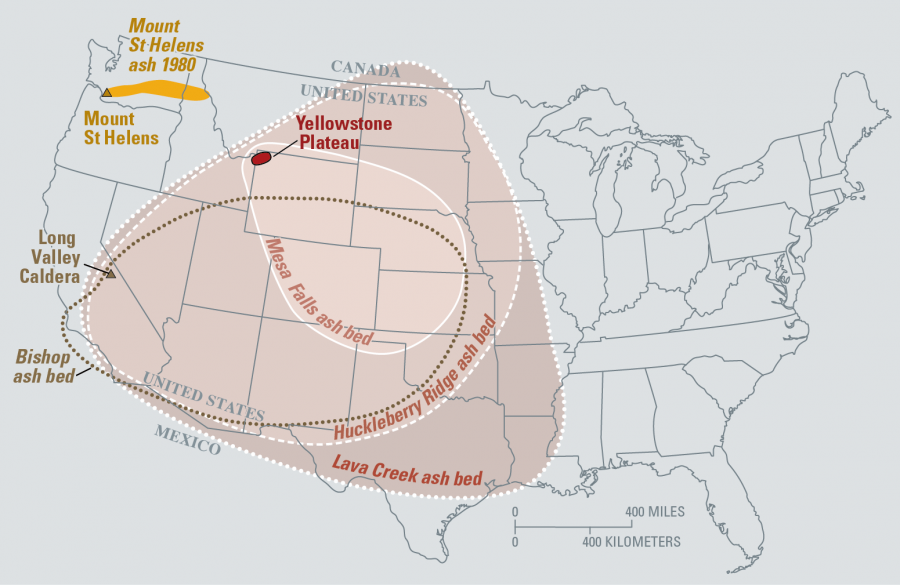
There are two maps that could be very relevant to your chances of survival, for few people can survive nuclear radiation or volcanic ash.
The first is from the USGS, showing the ash fallout zones from previous eruptions of Yellowstone. Additionally Long Valley is also on the west coast, so if you think a SHTF event could set off Long Valley or Yellowstone, half of the USA is not suitable.
The second is from the NRC and shows nuclear power plants:
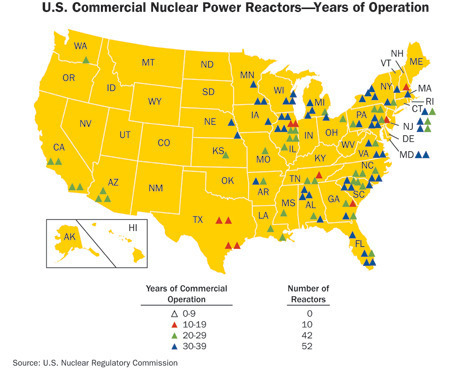
While the dangers of radiation are scary enough on their own, keep in mind that in the north-east society is dependent on nuclear plants for almost 50% of their electricity. Without them, people in that region are in for a rude awakening.
At first glance, it would seem that with the risks of radiation and ash combined, nowhere in the USA is safe. However, according to FEMA, if you are more than 50 miles from a nuclear power plant you should be safe. Perhaps double it and say 100 miles is safe. This will leave us some pockets away from the west where we can look for a good spot to be.
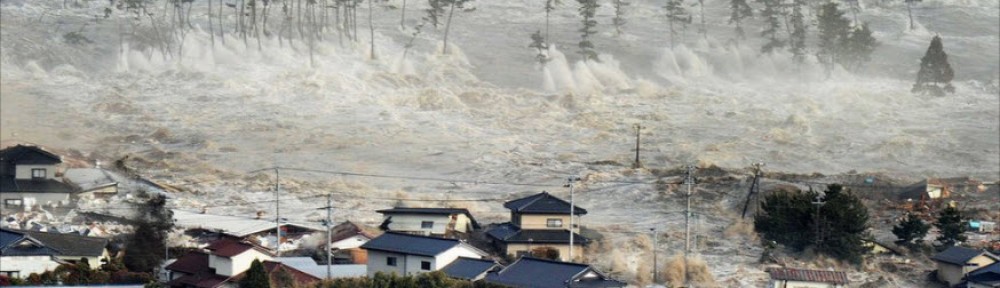
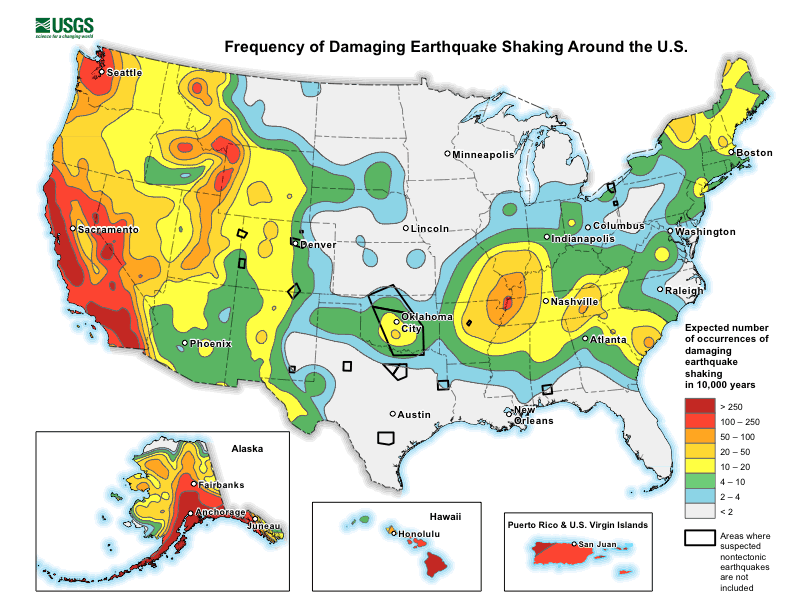
The third major threat is earthquakes. In this regard virtually all of California will be unsuitable for a safe spot. The other region that could suffer is between Memphis and the southern border of Illinois, known as the New Madrid Fault. Back in the early 1800s this location received a pair of 7.0+ earthquakes and experts have warned it could get hit again, especially with the recent tremors.
A fourth consideration is population density. As long as you are able to be self-sufficient, being in an area that has less people is highly desirable.
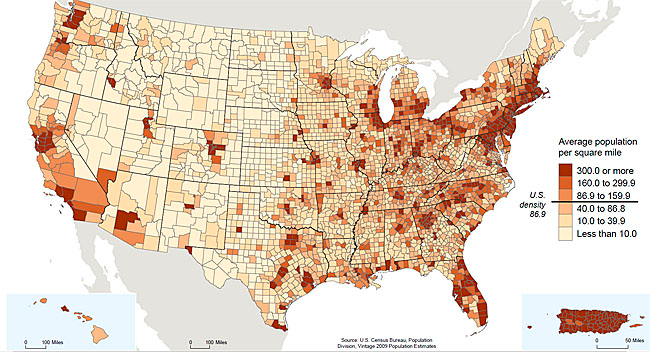
Note that I said less people. The lighter areas are sparsely populated because they aren’t particularly hospitable. You need to be near other people to some extent, and in the worst scenarios larger towns nearby means better scavenging. Based on population alone I’d be choosing the 86.9 to 159.9 areas.
I’ll start off with a region which I believe has the safest survival spots in the USA – East Kentucky and South-East Ohio
East Kentucky
Kentucky is one of the few states in the eastern half of the USA that does not have nuclear power plants. And virtually all of Kentucky is more than 100 miles away from such facilities.
There is a good reason for this; they have coal mines and coal-powered electricity, as well as hydroelectric.
Other positive factors are the distance from the coast, plus the protection from tsunamis provided by the Appalachian Mountains. Very large cities are a long way away, while the state has enough people (4 million) that you aren’t too secluded. The weather varies a fair bit, but at least it is not an extreme. Water is in good supply. And the land is fertile enough to grow fruit and vegetables.
Of value to many seeking safe spots is land prices – they are low in this region, so if you were to choose to move here, it is most likely going to be cheaper, or at least on par with your present location. The forests are plentiful, and good for hunting and also for hiding, if need be. If you are thinking of from buying some land, you should consider booking a cabin or camping spot for a vacation. Several “intentional communities” can be found near Lexington. That’s code for groups of self-sufficient hippies.
Here are some towns that stand out:
Corbin – handy to the Daniel Boone State Forest, which has one of the world’s largest concentrations of caves. This is excellent for those who don’t mind using natural shelters instead of building a bunker. An example of available property is 13 acres with a 2 bedroom cottage for $65,000. Or a 3 bed / 2 bath home on 46 acres for $130,000. It is also home to the Harland Sanders Cafe and Museum, where Col. Sanders perfected his Kentucky Fried Chicken recipe.
Hazard – yep, this town was the inspiration for the Dukes of Hazzard TV series. It is quite remote, and in a heavily-wooded area. The locals do not tend to have much of an income, and the town itself has lost 40% of its population since the middle of last century, dropping from 7,400 to 4,750. This is a good scenario for finding cheap property. In nearby Hueysville I found a trailer home on 33 acres for just $42,000. Be aware that there are some ugly spots around Hazard due to the coal mining.
Berea – buy an acre of clear land for $10K or so. This town was selected by Lawrence E. Joseph in his excellent book Apocalypse 2012, saying If any place is immune from Apocalypse 2012, it is Berea, Kentucky. He also points out that it is Christian with a capital C, and a tourist attraction due to all the arts and crafts generated by college students to pay for their tuition.
Louisville – Mega Cavern. I would move to Louisville for this, but folk in Kentucky & Indiana or Cincinnati should also be aware of this marvellous facility. It is located under and near the Louisville Zoo, and consists of 100 acres of underground caverns, the remains of limestone mining. It is privately owned, and space is let out to various businesses. During the Cold War the US government designated the cavern as a nuclear shelter capable of holding 50,000 people. To take a look at the cavern, they run guided tours (http://www.louisvillemegacavern.com ). The web site for the commercial storage aspect is at http://www.louisvilleunderground.com. Storing a trailer or RV starts at $75/mo. Fill it with supplies, and anytime you are worried you can go to your trailer, which happens to be in the safest place in Louisville!
South East Ohio
The southern half of Ohio is also more than 100 miles from any nuclear power plant. Land is cheap, and of interest to many ancient astronaut theorists is that it has some ancient monuments. For camping, Wisteria (www.wisteria.org) is an excellent choice for anyone who has New Age or pagan leanings.
Chillicothe – as the centre of the ancient Hopewell tradition, nearby you will find the Hopewell Culture National Historic Park, with dozens of earthen mounds. Only 20,000 people, and on a major highway – yet there are many other alternate routes in and out. TV survivalism expert Dave Canterbury is from here. Properties available in early 2011 included a 3 bedroom house on 5 acres with some great shedding for $120,000, or a shack on 2 acres in the woods for $40,000. For camping, try nearby Tar Hollow State Park.
Peebles, Ohio is my #1 safe spot for all of the USA.
With a population of just 1700 people, Peebles is classified as a village. So it is quiet, but if you need a city Cincinnati is just an hour’s drive away. Property is great value relative to the coastal states – you can buy 20 acres of flat, cleared land for $40,000.
Just 5 miles north of the town is the famous Great Serpent Mound. It is roughly 1,000 years old, 411 metres long, and is the largest snake effigy in the world. Interestingly, State geologists concluded in 2003 that a meteorite once crashed into the site.
For the last 9 years the Friends of Serpent Mound have held a Lighting the Serpent event on the winter solstice, and presumably it was held on Dec 21, 2012. On that evening they place and then light 900 candles, as a well as a sacred fire.
Cabins (from $70 per night) and camping (from $23 per night) are available at Long’s Retreat. There’s also Mineral Springs Lake Resort (which has some pretty dire reviews) and if you like getting completely back to nature, try the Cedar Trails Nudist Retreat (it is only open from May to September).
The Amish are well-known for their back-to-basics culture, and Peebles has almost 100 Amish households. While they are not known for socialising with outsiders, they do trade and are typically pacifists – so having so many living locally can only be a plus, post-SHTF.
The Ten Biggest US Metro Areas
These cities are so large that the #1 priority is getting out ahead of the pack. It doesn’t matter how close or good your safe spot is if you cannot get to it. In general the following suggestions do not account for traffic, or your personal location within the city.
San Francisco / San Jose
Hopefully you don’t live in downtown San Francisco, because that could prove to be a difficult place to escape from. I’d forget the bridges and head south along the coast.
For everyone else, head for Sacramento, then get past Sacramento on the east side. The safe spot I recommend is Grass Valley, a pleasant former gold-mining community with lots going on. This fulfils another safe spot criteria – visiting your spot can be a vacation, not a chore. A home in the hills, private with a few acres, can be purchased for $100K-$200K. If yoga is your thing, check out the local Sivananda Ashram Yoga Farm.
Normally I would look for somewhere further away from major cities, but east has rough terrain, west has a famous fault line, south has many people, and north has a dam that could burst (Shasta Dam). Be very careful to make sure your safe spot, anywhere in the world, is not below a dam. Dams can break in earthquakes, or overflow with heavy rain / change of climate / lack of engineers.
Los Angeles / San Diego
A key factor in many scenarios is the San Andreas fault, which runs through San Francisco, down the Pacific coast, alongside the San Bernardino mountains and down the middle of the Gulf of California. Ideally you want to be east of this fault line before a major earthquake occurs. This will mean you are safe from the earthquake, and roads/bridges are still passable. Best case scenario from L.A. or San Diego would be 1-2 hours of driving to get beyond the fault line. After that, plan on a lot more driving, because southern California is too arid, and not recommended for survival.
Exiting the city is very important for L.A., so I would aim to get to Barstow, a major highway hub, and have a safe spot somewhere way beyond. Many L.A. folk might think of the road to Las Vegas when escape is required, but fortunately there are alternate routes to Barstow. But once you reach Barstow, do not head towards Vegas, and do not contemplate surviving in Vegas – it will be like a refugee camp.
A good move would be to buy a property in or around Barstow. A house can be purchased for less than $30,000, which means a deposit as low as $1000, and repayments of about $1000/yr. Or you could rent a property, or even a lockup. While it would be OK to survive here for short-term events, the key is that you have a supply cache in Barstow, a place where you can store fuel, food & water, as a waypoint towards somewhere better, such as Flagstaff.
Albuquerque, New Mexico is 8-9,000 feet above sea level, which some survivalists find appealing. Being so far inland, height is not a necessity, and you’ll find that the arid climate and inability to grow crops major negatives for many SHTF scenarios, such as a loss of the power grid, or a pandemic. I recommend heading farther east.
San Diego
Considering you would not head towards Los Angeles, San Diego has two ways out – south of the border and east. East is preferable, but Baja California is an option for those who like the area and are familiar with it. Obviously you would not want to drive through Tijuana, but rather skirt around it.
Blythe is similar to Barstow, as it is a traffic hub with low property prices. My suggestion is to have a cache in Blythe.
Southern California > Heading East
While Flagstaff is nice, and Sedona has appeal to many, for long term survival you want to head much further east. Beyond Texas you will find it easier to live off the land, as opposed to the dry regions approaching Texas. For those worried about nuclear fallout, there happens to be a reasonably wide corridor – typically 100+ miles – that is a safe distance from any nuclear facilities. It follows the Texas/Oklahoma border (don’t plan on crossing Red River), then along southern Arkansas, up through northern Mississippi, and then western Tennessee to Kentucky and finally southern West Virginia. Along this path it is quite easy to keep away from major cities, access/scavenge supplies and get to anywhere that suits you, pre-determined or otherwise.
Houston / Dallas
Without a doubt, if you do not have a local safe spot, north-east is the direction to head, following the path detailed above. For a local safe spot, consider:
Hemphill, TX – out-of-the-way, where the Sabine National Forest meets the Toledo Bend Reservoir. Expensive for a safe spot, homes will set you back $100K+. However, if your family desires a vacation home, then this could serve a dual-purpose.
Mena, AR – servicing the Ouachita Mountains, Mena is a place people visit for the outdoor activities. Only 150 miles from Dallas, prices are very good. A quick search at Trulia.com found an acre of bare land for $12,000, 4 acres for $22,500, and a one-bedroom home for $18,000. There’s some elevation as well, the city is 357 metres above sea level. Population of 5000.
Further afield is Whitwell, TN (see below)
Atlanta
In my opinion the Chattanooga, TN area makes for an excellent choice, and you can get there in less than 3 hours. The city is surrounded by mountains and ridges, and it is affordable with great liveability. Just outside of Chattanooga is Whitwell. Small parcels of land, or homes, can be found for under $25,000 if you aren’t too fussy. The Sequatchie Valley Institute teaches sustainability, and has a few places for interns – meaning you can live there for $5-$10/day.
On the other side of Chattanooga, within the Chattahoochee National Forest is a town called Hiawassee. There you will find Enota – which has turned the most elevated private land in Georgia into a working farm and RV site. Park your RV at their “Entrepreneurial Village” for $1000/mo, which includes T1 internet connections. With or without your own RV, you can also stay for free in exchange for work.
Note: Chattanooga is listed as having a risk of earthquakes by the USGS, however it is at the bottom of the scale, and nothing like the New Madrid zone or California.
Chicago or Detroit or Minneapolis
North-Eastern US cities offer two general directions: trek south to Kentucky and West Virginia, or have a safe spot to the North, just before or in Canada. Heading north has a major problem – cold weather and snow. Unless you are certain that climate change will be in your favour, the winters will mean your survival is substantially more difficult.
The Upper Peninsula of Michigan holds minor appeal, due to the sparse population, the ease of getting there from Minneapolis and Chicago, and cheap prices. But unless you get lucky due to some cataclysm-created climate change, it is too cold to consider.
Heading south, there are no obvious safe spots. Kentucky, West Virginia and Tennessee are a long drive, especially if you are caught unprepared. Having a mid-point cache would be prudent if you have the dollars and inclination. When choosing a cache location, secondary considerations are accessibility in a crisis, costs, familiarity, and an x-factor that makes you like the location. Of primary importance is that you can get there. Even if you strive to keep your gas tank full, honestly how low does it sometimes get? That’s how close your cache needs to be. If you typically refuel when your tank is half empty, and that gets you 150 miles, then your cache needs to be that close. That way, if you are at a party, or work, or a picnic, or a ball game, and you are alerted somehow, and going home first is not an option, you can get to your cache. Your cache will have everything you need (fuel, food, water etc) to get you to your safe spot further south.
Nowhere has special appeal to me in Indiana, but at a push I’d offer Bloomington and surrounds. But only if you know you’ll have the gas to get there!
(If you do choose Bloomington for a cache, check out the (failed) reproduction of the Great Pyramid in nearby Bedford.)
New York City / Boston
The famous Woodstock is just two hour’s drive from NYC, and if you can afford it, makes an ideal safe spot. Nearby Cairo is more affordable. And it gets cheaper the further inland you head. Near Liberty I found a 2 bedroom home on 5 acres for $30K.
If you live in New York City, getting out when the SHTF could prove difficult, if not impossible, because the few bridges and tunnels that cross the Hudson River will become jammed. And depending on the scenario, they might not be safe either. Furthermore, in the event of a terrorist attack/threat, or act of war, tunnels and bridges could be closed by the authorities. They were closed to all except emergency vehicles for 24 hours or more following the 9/11 attacks.
Unless you have a bunker in the Hamptons, north will be the direction to head. For my recommended safe spots, at some stage you will need to cross the Hudson. Although bridges further north are less likely to be blocked/closed, there could still be a significant amount of escaping traffic, and bridges might not withstand the force of whatever is occurring. If you have the basic skills, consider crossing by boat. This means either having just a boat stored safely away at your preferred crossing point, and having a cache on the other side of the river.
I think the best crossing point would be near Rip Van Winkle Bridge. The bridge has a pedestrian walkway, which means you could also beat the traffic jam with a motorcycle. For a boat crossing, the river is about 1500ft wide here, and 10 miles north it is only 600ft wide.
While the areas near to Rip Van Winkle Bridge do not have many bargain properties, you could also consider a self-storage facility – but make sure you can access your storage in an emergency.
One such facility in Leeds (walking distance from Rip Van Winkle Bridge) has suitable “drive up” storage units, large enough to fit a car, for $110-$135 per month. Keep a vehicle here, loaded with supplies and fuel. Drive to the bridge from Boston or NYC (consider a motorcycle if you are NYC), and if you can’t drive across the bridge you can walk across it.
Even better, drive a pickup or wagon and keep an inflatable dinghy in it. A four-person dinghy can be purchased for less than $1000 including a foot pump.
When you retrieve your fully-stocked vehicle from your Leeds storage facility, head to your local safe spot, or head south. Specifically, west then south. If it were me, I would risk the long travel and have a spot in Ohio or Kentucky, rather than face the harsh winters of the northern states.
Philadelphia / Washington D.C.
This part of the USA is very populated and doesn’t offer much for survivalists. I suggest fleeing west. Because many others could have the same idea, pay particular attention to your exit routes. While freeways are going to get you out quickest, traffic can be a problem. Every step of the way you need to be aware of which secondary roads will serve you best. There are enough of these to ensure that everyone who considers leaving the major arteries should be able to escape.
My favoured region of East Kentucky and South-East Ohio is probably beyond the range of your vehicle. If this is the case, you will either need to carry spare fuel in your vehicle at all times, or have a cache midway.
Midway covers a large area, depending on your starting point and your chosen roads. Land isn’t particularly cheap, and there are no stand-out locations. If pushed I’d suggest Parsons, WV, or Altoona, PA.
Your best bet is to utilise a self storage facility. 10 feet by 15 feet, with drive up access, can be had for $120-$130 in Frederick, MD. This town is easy to access, and just 150 miles from Philadelphia, or 50 miles from Washington DC. There you can keep a vehicle, fuel, and supplies sufficient to complete your escape.
Miami / Fort Lauderdale
Williston, FL is about the right distance from Miami for a cache. If you can get out of the cities, then a place that has your extra supplies (especially fuel / water / food) is very useful to have. If you just grab supplies and keep going, that is great. Or you can stay until the panic has subsided – depending on the scenario of course. A run down home or trailer on a small lot can be had for under $20,000. A bargain I noticed during my research was a 3 bed/2 bath home on 1.25 acres, hidden away behind trees, with a large pole barn, for $28,000.
Otherwise, I have not yet discovered a standout safe-spot between Miami and Chattanooga.
Always keep in mind, the best spot is one you will actually use – so for most people that means being within a few hour’s drive of your home. A second-rate survival spot in the hand is worth two in the bush! Find the best compromise for your situation.
Canada
In general, your options are staying put or making a major journey southwards. Every survivalist should aim for having a few years’ worth of food stored away, but if winters in your area are a significant factor, then food and shelter are critical. For most Canadians I do not recommend seeking out a local safe spot – you’ll be better served by improving the survivability of your home.
Eastern Canada
The major cities of eastern Canada all suffer the problem of very cold winters. I can only suggest fleeing south to the USA. Or staying at home.
One of my blog readers asked about how best to survive if you live on Prince Edward Island. Staying at home is an option for her, because the island can support agriculture. I’d be recommending the island to people of Ottawa, Montreal and Quebec if it was connected to the mainland, instead of relying on a long narrow bridge.
British Columbia
My fleeing advice for Vancouver is the same as Portland and Seattle in the USA. But you are so isolated that I’d plan on staying put. I could not find any towns or areas that stand out as places to be. If you have a favourite local getaway, or you have friends or family on a farm, then they’d be good options. But I wouldn’t invest heavily in a safe spot – instead use any funds you have to build up your supplies at home. Rent some local storage space if need be.